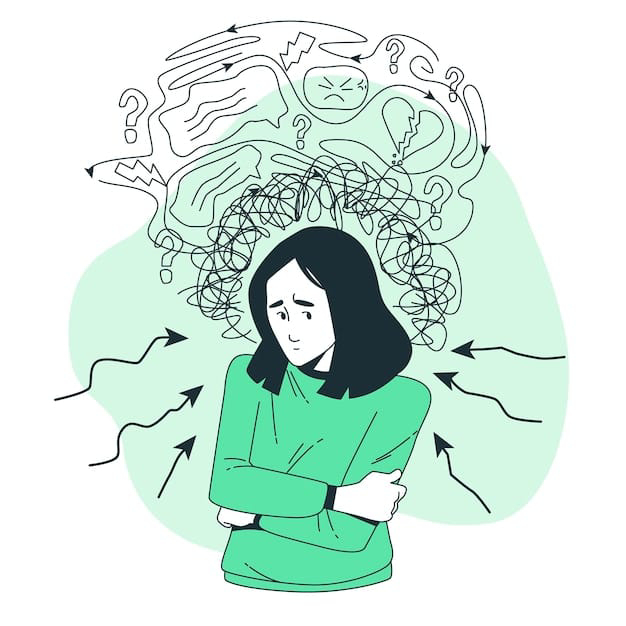
Hi, today I want to share an interesting topic, namely about how humans think from a philosophical perspective,
Understanding human thought from a philosophical perspective is a profound and complex journey, as philosophy itself is about questioning and reflecting on the foundations of existence, knowledge, values, reason, thought, and language. Human thought has been a central subject in various branches of philosophy for thousands of years.
Here are some of the main philosophical perspectives on human thought:
1. Rationalism
Key Figures: René Descartes, Baruch Spinoza, Gottfried Wilhelm Leibniz
* Core of Thought: Rationalism emphasizes that reason (ratio) is the primary source of knowledge and truth. The human mind has an innate capacity to understand reality through logic, deduction, and intellectual intuition, independent of sensory experience.
* Mode of Thought: Humans think using deductive reasoning from clear and distinct principles (e.g., mathematical axioms or innate ideas). Truth is considered accessible through pure thought, as in Descartes' famous statement: "I think, therefore I am" (Cogito, ergo sum). This suggests that consciousness and thought are the most fundamental evidence of existence.
* Focus: A priori knowledge (knowledge independent of experience), the universality of truth, and the innate capacities of the mind.
2. Empiricism
Key Figures: John Locke, George Berkeley, David Hume
* Core Thought: Empiricism holds that sensory experience is the primary source of all knowledge. The human mind is initially a tabula rasa (blank slate) filled by experience.
* Way of Thinking: Humans think by collecting data from the senses, then analyzing, associating, and generalizing ideas from those experiences. The ideas or concepts we possess are copies or combinations of sensory impressions. Hume even argued that causality (a cause-and-effect relationship) is simply a habit of the mind that sees two events as always occurring together, not something inherently present in reality.
* Focus: A posteriori knowledge (knowledge derived from experience), the importance of observation, and the role of sensory data in shaping thought.
3. Idealism
Key Figures: George Berkeley, Immanuel Kant (Transcendental Idealism), G.W.F. Hegel
* Core Thought: Idealism asserts that reality is fundamentally mental or ideational. What we perceive as the physical world is actually a construct of the mind, or dependent on the mind.
* Way of Thinking:
* Berkeley (Subjective Idealism): "Existence is perceived" (Esse est percipi). Objects do not exist unless they are perceived by the mind. Therefore, human thought creates reality through their perceptions.
* Kant (Transcendental Idealism): Kant attempted to bridge rationalism and empiricism. He argued that the human mind does not passively receive data, but rather actively organizes and shapes sensory experience through innate categories of reason (such as space, time, causality). We cannot know the 'thing in itself' (Ding an sich), but only what appears to us, filtered and shaped by our cognitive structure.
* Hegel (Absolute Idealism): The mind is part of the Universal Spirit (Geist) that develops through a dialectical process (thesis, antithesis, synthesis). Human thought is a manifestation of this Spirit's development toward complete self-understanding.
* Focus: The role of the mind in shaping reality, the limits of human knowledge, and the subjective or mental nature of existence.
4. Phenomenology
Key Figures: Edmund Husserl, Martin Heidegger, Maurice Merleau-Ponty
* Core of Thought: Phenomenology seeks to study phenomena or experiences as they appear in consciousness, without preconceptions or assumptions about external existence. The goal is to understand the essential structure of consciousness and experience.
* Way of Thinking: Through "epoche" (withholding judgment) or phenomenological reduction, humans attempt to set aside assumptions about the external world and focus on how the object or experience is presented directly to consciousness. This is a highly reflective and introspective way of thinking, aiming to reveal the essence of conscious experience. Merleau-Ponty adds the dimension of the lived body as central to perception and experience.
* Focus: Conscious experience, intentionality of consciousness (consciousness is always about something), and the essence of how we experience the world.
5. Existentialism
Key Figures: Søren Kierkegaard, Jean-Paul Sartre, Albert Camus
* Core Thought: Existentialism emphasizes individual freedom, responsibility, and meaning in human existence. "Existence precedes essence," meaning that humans first exist and then define themselves through their choices and actions.
* Way of Thinking: Humans think by confronting the anxiety, absurdity, and responsibility of their choices in a world devoid of inherent meaning. Thinking here is the process of confronting the burden of freedom and creating personal meaning in a life lacking a predetermined purpose. It involves an awareness of mortality, finitude, and the need to act authentically.
* Focus: Freedom, individual responsibility, the meaning of life, existential anxiety, and authenticity.
6. Pragmatism
Key Figures: Charles Sanders Peirce, William James, John Dewey
* Core Thought: Pragmatism assesses truth and meaning based on their practical consequences and usefulness. An idea is true or meaningful if it works in practice and has verifiable effects.
* Ways of Thinking: Humans think with a focus on problem-solving and adaptation. Ideas are tested through experimentation and experience. Truth is not static, but rather dynamic and constantly evolving based on practical results. Thinking is a tool for acting and functioning in the world.
* Focus: Practical consequences, utility, problem-solving, and the instrumental nature of knowledge.
Each of these perspectives offers a different lens for understanding the complexity of the human mind. They are not necessarily mutually exclusive, and many philosophers attempt to integrate insights from different traditions. Studying the philosophy of human thought helps us be more critical of how we construct knowledge, understand reality, and live our lives.